.svg)
Stop Rolling Out AI. Embed It Where Work Happens.
Providing access to a chatbot isn't a strategy, it’s theater. While most organizations are busy tracking logins, the companies winning the AI race are those embedding intelligence directly into the browser where work actually happens.
It starts with the browser. Not because the browser is everything, but because it's where work, data, and every enterprise system intersect. It's exactly the foundation AI needs to go from a tool you use to a system that actually understands how your organization works.
That understanding is what separates real AI adoption from the theater version. Most companies rolled out a chat window, tracked logins, andcalled it transformation. But the returns tell a different story. Ramp published data from 50,000 businesses: since 2023, the top quartile of AI spenders have more than doubled their revenue. The bottom quartile is flat. Not declining, flat. a16z's latest benchmarks show something similar at the individual level. Engineers heavily using AI now generate over $700,000 in ARR per head, up from around $200,000 three years ago. For those not using AI, the number hasn't moved.
Treating AI as a productivity play is like trying to save money on ink when you own a printing press. The companies pulling away aren't using AI to do the same work faster. They're using it to change what work looks like, and the gap compounds in one direction.
The Enterprise AI Browser is about adoption.
Access is not adoption
Because many have mistaken access for adoption, organizations added a layer on top of work.
AI that runs in a separate window can't learn from how work actually happens. It can't build organizational intelligence that compounds over time. It can't act proactively. It's a tool, not a transformation.
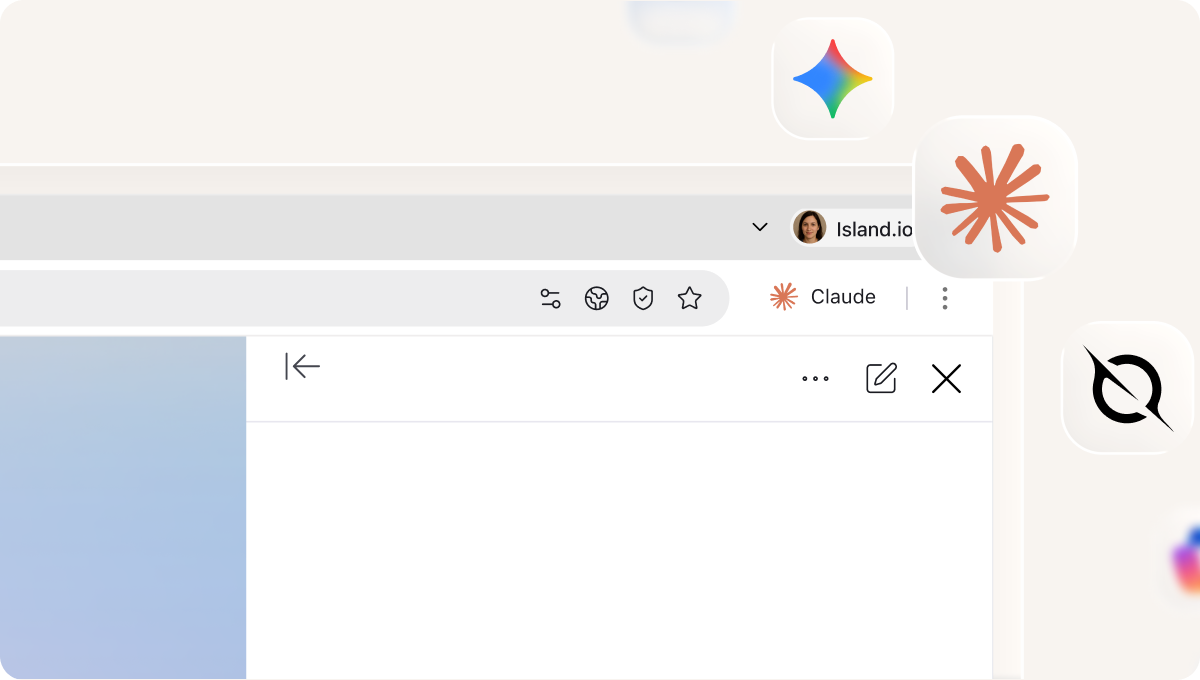
Real adoption means your engineers get Claude because that's what works best for code, your business teams get Gemini or ChatGPT because that fits their workflow, and the organization doesn't have to choose one provider or manage five separate rollouts. It means agents that automate a multi-step procurement workflow across three internal tools because the platform already understands the applications and the permissions. It means that when a product manager builds an app with Lovable over a weekend, there's a way to publish it company-wide on Monday with single sign-on and compliance already in place, no six-week IT queue.
These aren't hypothetical. They're the problems landing on every CIO's desk right now. And they all point to the same missing layer.
The missing layer
The browser is now the enterprise operating system. Every SaaS app, every workflow, and every data source runs through it. Employees spend more time in the browser than any other application. And yet, the browser has been almost entirely absent from the enterprise AI conversation.
When AI lives inside the browser, every interaction becomes an AI interaction. Every document you read, every dashboard you analyze, and every form you fill out becomes context that AI can learn from and act on. The browser doesn't just deliver AI. It becomes the AI layer.

The browser is just the starting point. Work doesn't stop at the tab. Thick desktop applications, local file systems, standalone AI tools, and corporate network resources are all part of how the enterprise operates. The AI layer has to extend across the full workstation and into the network, carrying the same identity, context, and policy everywhere work happens.
Because when you have that foundation, something powerful becomes possible. The platform sees how your people actually work: which applications they use, what tasks they repeat, what patterns emerge across teams. Over time, it can start to anticipate what people need before they ask. Not because it was trained on generic internet data, but because it's learning from how your specific organization operates, every day, across every user.
That's where enterprise AI is heading, and it requires a platform built for the enterprise from the ground up. Gartner recently told CISOs to block AI browsers, and until now, they were right. Today's consumer AI browsers are experiments built for individuals, with no enterprise governance or strategy on how to embed AI in all your work. The answer isn't to keep AI out of the browser. It's to build the platform that makes AI safe enough to trust and powerful enough to transform how work gets done.
The first Enterprise AI Browser, built for what comes next.
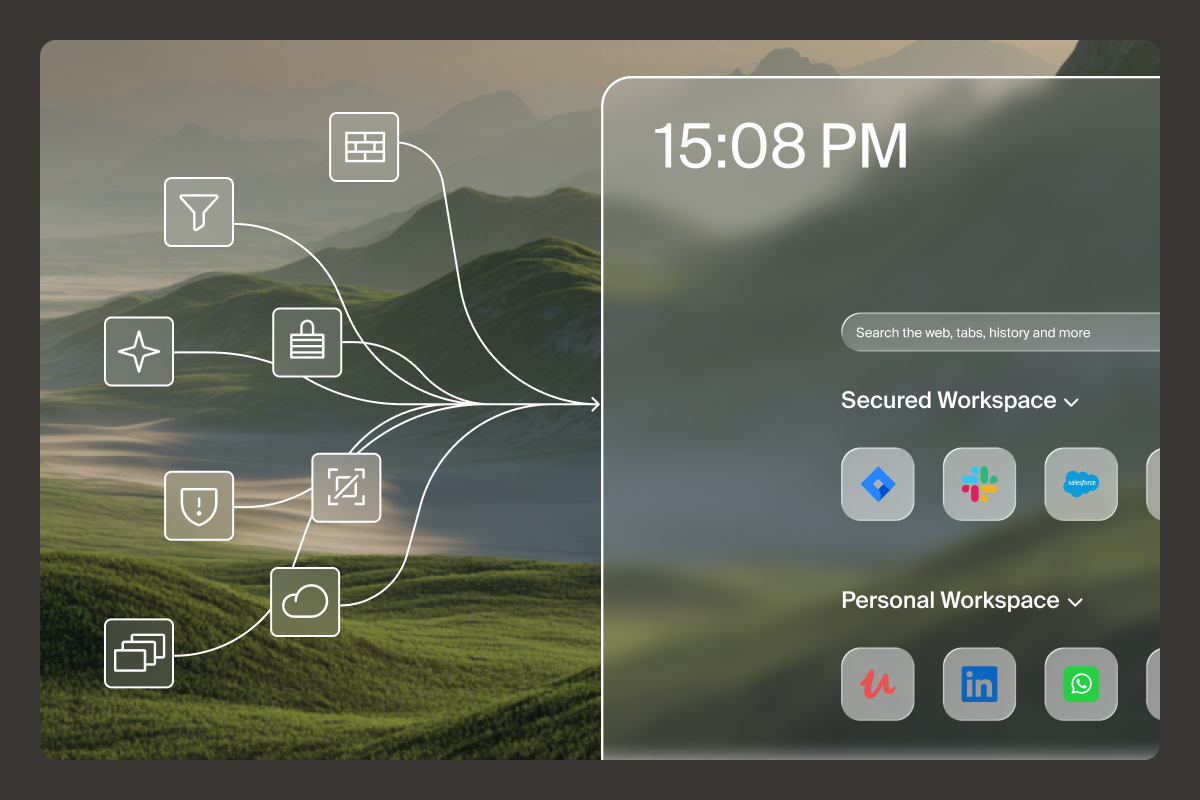
Island is the platform where enterprise work gets done. Browser, desktop, network, one environment with identity, data protection, governance, and visibility built in everywhere work happens but it starts with a browser. The Enterprise AI Browser.
AI-intensive companies are doubling revenue while their peers flatline. The value creation gap is widening every quarter, and the organizations capturing those returns aren't the ones that gave employees a chatbot. They're the ones that made AI native to how work actually gets done.
That starts with the browser. It extends to the desktop and the network. And it compounds from there.


.svg)
.svg)
